

Kilimanjaro Routine.
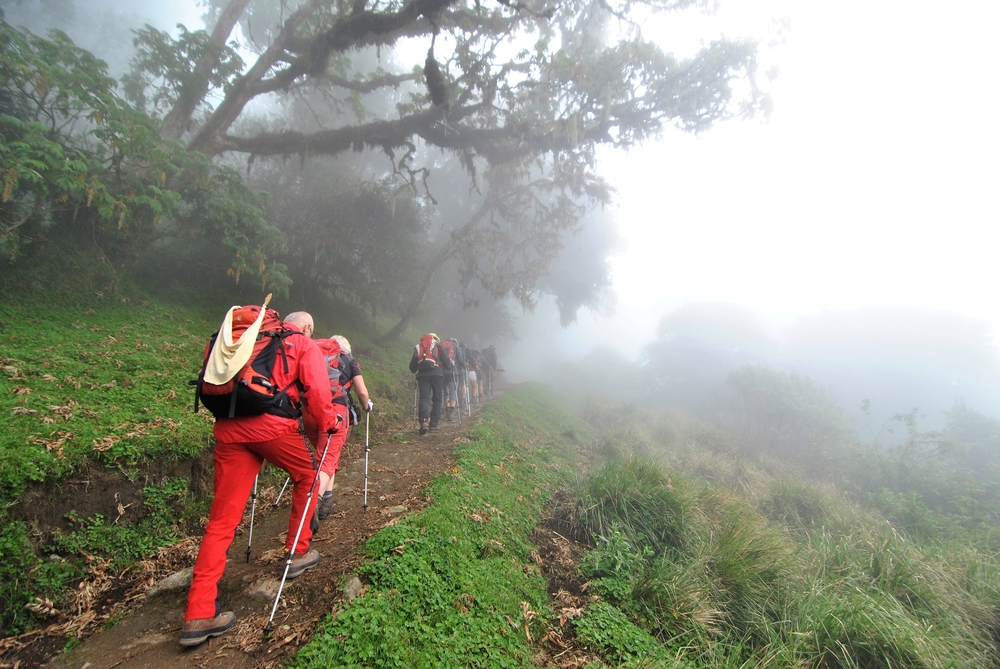
Life on the mountain follows a simple routine.
You wake up early with a warm drink. After breakfast, you begin hiking at a slow, steady pace. The goal is not speed but steady progress.
You stop for breaks to drink water and rest. Lunch may be served along the trail or at the next camp.
By mid-afternoon, you arrive at camp. You have time to relax, drink tea, and enjoy the views before dinner.
Evenings are calm and quiet. After a briefing about the next day, you go to sleep early to rest.
Food & Accommodation on Kilimanjaro
Many people are surprised by the quality of food on the mountain.
Meals are warm and filling because your body needs energy. You may eat soup, rice, pasta, vegetables, chicken, fruit, and even pancakes.
Staying hydrated is extremely important. You will drink several liters of water each day.
On most routes, you sleep in tents shared with one other climber. Tents are designed for mountain conditions. On the Marangu Route, you sleep in simple mountain huts.
Meet your guides and crew
Your mountain team plays a huge role in your success.
The lead guide is responsible for safety and decision-making. Assistant guides support the group and check on climbers. The cook prepares hot meals every day. Porters carry tents, food, and equipment.
Porters are incredibly strong and hardworking. They carry heavy loads up the mountain while still smiling and encouraging climbers.
At GoClimbKili, we are committed to fair treatment and ethical working conditions for all crew members.
Summit Night What to Expect
Summit night is the most challenging part of the climb.
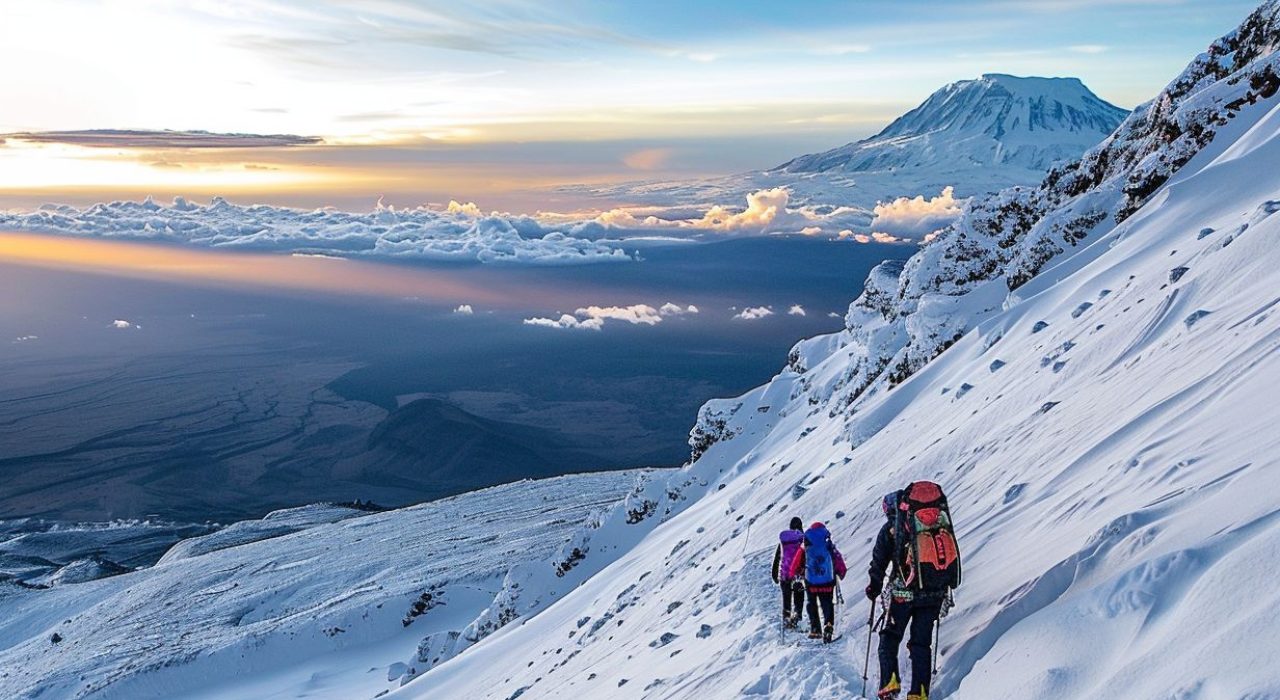
You wake up around midnight. After a small snack and tea, you begin hiking in the dark. The temperature is very cold, and you move slowly.
The climb feels long because of the altitude and steep sections. Each step requires effort.
After several hours, you reach the crater rim. From there, it takes about one more hour to reach Uhuru Peak.
When the sun rises, you see the world below you. It is an emotional moment. Many people feel proud, relieved, and overwhelmed with happiness.
After celebrating, you begin the descent back to camp.
Safety and Emergency procedure
Safety is always the top priority.
Guides check your health daily using a pulse oximeter to measure oxygen levels. They ask about headaches, appetite, and sleep.
If someone shows signs of serious altitude sickness, the only treatment is to descend. Emergency oxygen is available if needed.
Summiting is important, but returning safely is more important.
0 Comment