
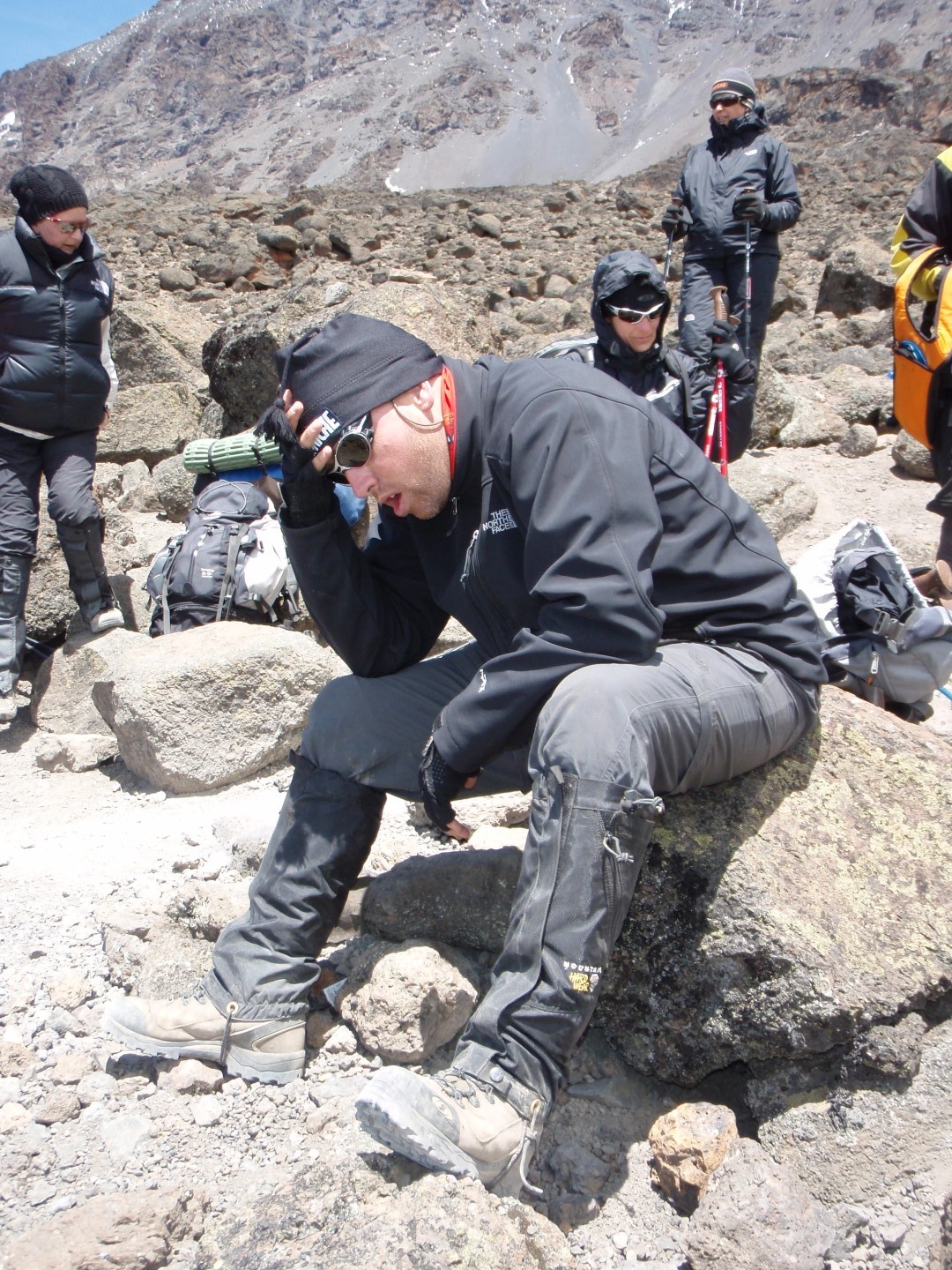

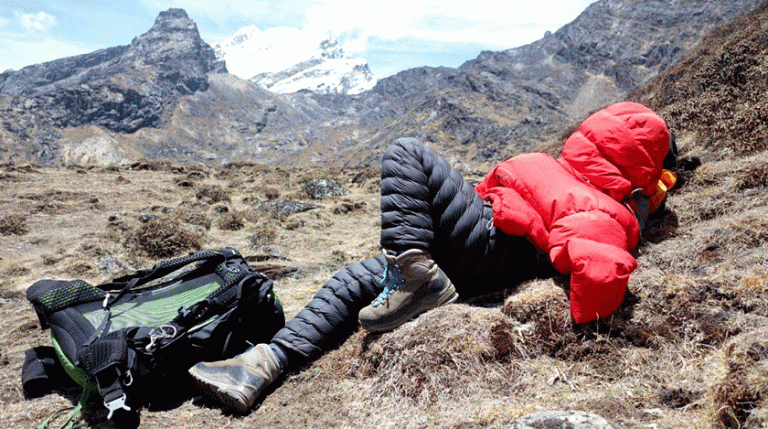
Acute Mountain Sickness (AMS) on Mount Kilimanjaro
If you are planning to climb Mount Kilimanjaro, you must understand a condition known as Acute Mountain Sickness (AMS).
Altitude sickness is the single greatest risk on Kilimanjaro.
At GoClimbKili, we believe education is the first step in prevention.
What Is Acute Mountain Sickness?
AMS occurs when the body struggles to adapt to reduced oxygen levels at high altitude.
High altitude is generally defined as elevations above 4,900 ft (1,500 m). However, serious altitude illness typically develops above 12,000 ft (3,600 m).
Although oxygen still makes up about 21% of the air at all elevations, air pressure decreases as altitude increases. This means:
There are fewer oxygen molecules per breath
Your body must work harder to absorb oxygen
Physical performance decreases
At 12,000 ft, there are roughly 40% fewer oxygen molecules per breath than at sea level.
At the summit of Kilimanjaro (19,341 ft / 5,895 m), only about half the oxygen available at sea level is present.
This places the summit in what mountain medicine classifies as Extreme Altitude.
High Altitude Categories
Mountain medicine recognizes three main altitude zones:
High Altitude: 4,900 – 11,500 ft (1,500 – 3,500 m) Very High Altitude: 11,500 – 18,000 ft (3,500 – 5,500 m) Extreme Altitude: Above 18,000 ft (5,500 m)
AMS is common in the first category. It is expected in the second. In extreme altitude, the human body can function only for short periods even with acclimatization.
Kilimanjaro’s summit falls into the most serious category.
What Causes AMS?
AMS happens when the body fails to adapt quickly enough to reduced oxygen.
The primary causes are:
✔ High altitude
✔ Rapid ascent
✔ Excessive physical exertion
✔ Dehydration
The biggest factor is ascending too high, too quickly.
Given enough time, the body adapts through a process called acclimatization, which usually requires 1–3 days at any new altitude level.
How the Body Adapts (Acclimatization)
When oxygen levels drop, the body responds by:
✔ Increasing breathing depth and rate
✔ Producing more red blood cells
✔ Increasing pressure in pulmonary capillaries
✔ Producing enzymes that improve oxygen release to tissues
If the body cannot adapt fast enough, symptoms of AMS appear.
Who Is at Risk?
AMS is common and unpredictable.
It does not depend on:
✔ Age
✔ Gender
✔ Physical fitness
✔ Previous hiking experience
Even strong, athletic climbers can develop severe altitude illness.
Genetics appears to play a significant role.
Your risk increases if you:
✔ Live at sea level
✔Ascend quickly
✔ Exert yourself heavily
✔ Have anemia
✔ Have heart or lung conditions
✔ Use medications that suppress breathing
✔ Have had AMS before
At elevations above 10,000 ft (3,000 m), over 75% of climbers experience mild AMS symptoms.
Symptoms of Acute Mountain Sickness Mild AMS
Most climbers on Kilimanjaro experience mild AMS during acclimatization.
Symptoms include:
✔ Headache
✔ Nausea or dizziness
✔ Loss of appetite
✔ Fatigue
✔ Shortness of breath
✔ Disturbed sleep
✔ General weakness
Symptoms typically begin 12–24 hours after reaching altitude and usually resolve within 48 hours.
If symptoms remain mild, ascent may continue at a controlled pace.
Communication is critical. Climbers must report symptoms immediately.
Moderate AMS
Moderate AMS is more serious and requires intervention.
Symptoms include:
✔ Severe headache not relieved by medication
✔ Persistent nausea and vomiting
✔ Increasing weakness
✔ Shortness of breath
✔ Decreased coordination (ataxia)
At this stage, descent is strongly recommended.
Descending as little as 1,000 ft (300 m) can produce noticeable improvement.
Continuing to climb with moderate AMS can lead to life-threatening complications.
Severe AMS
Severe AMS is a medical emergency.
Symptoms include:
✔ Shortness of breath at rest
✔ Inability to walk
✔ Altered mental status
✔ Fluid buildup in the lungs
✔ Severe neurological symptoms
Immediate descent of at least 2,000 ft (600 m) is required.
Hospital treatment becomes necessary.
Life-Threatening Conditions
Two critical complications of severe altitude sickness can occur:
High Altitude Pulmonary Edema (HAPE)
HAPE is fluid buildup in the lungs that prevents oxygen exchange.
Symptoms include:
✔ Breathlessness at rest
✔ Chest tightness
✔ Persistent cough producing frothy fluid
✔ Extreme fatigue
✔ Confusion or irrational behavior
Without rapid descent and oxygen, HAPE can be fatal.
High Altitude Cerebral Edema (HACE)
HACE is swelling of the brain caused by fluid leakage.
Symptoms include:
✔ Severe headache
✔ Loss of coordination
✔ Confusion
✔ Memory loss
✔ Hallucinations
✔ Loss of consciousness
✔ Coma
HACE progresses rapidly and is often fatal without immediate descent and emergency treatment.
How GoClimbKili Manages AMS At GoClimbKili, altitude safety is our highest priority.
We:
✔ Conduct twice-daily health checks
✔ Monitor oxygen saturation with pulse oximeters
✔ Assess symptoms systematically
✔ Carry emergency oxygen on every climb
✔ Design itineraries with proper acclimatization
✔ Enforce descent when necessary even if it means abandoning the summit
Descent is the most effective treatment for altitude sickness.
No summit is worth a life.
Final Word on AMS
Altitude sickness is common on Kilimanjaro but it is manageable when:
✔ Climbers ascend slowly
✔ Health is monitored daily
✔ Guides are properly trained
✔ Emergency protocols are in place
Climbing Kilimanjaro is a serious undertaking. With the right preparation and the right team, it is also a safe and achievable goal.
At GoClimbKili, your health always comes before the summit.
0 Comment